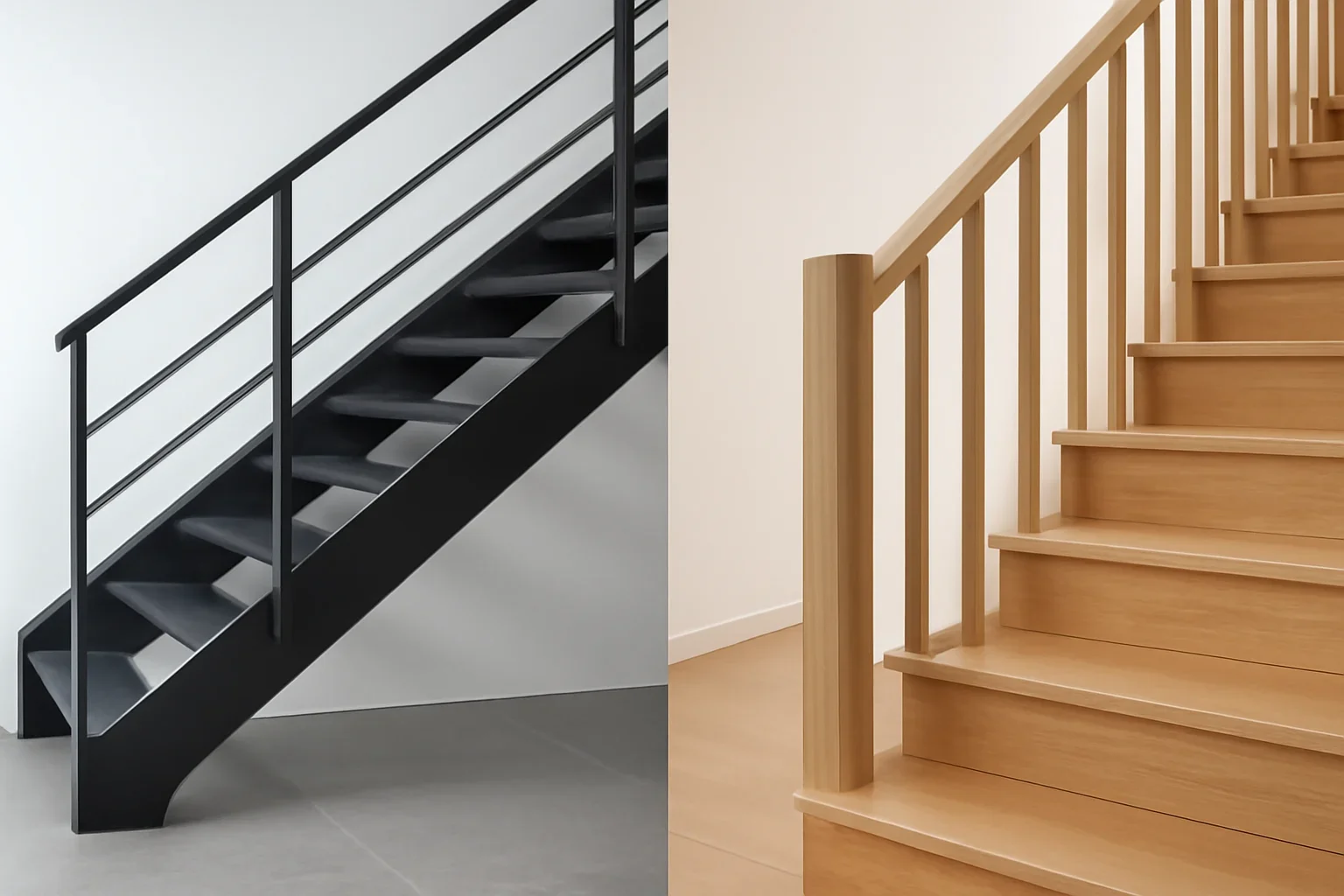
Modern custom homes
For new builds and major renovations in the Lower Mainland, metal can help create floating stairs, slim stringers, and clean transitions with glass, wood, stone, or concrete.

Choosing between metal stairs and wood stairs is not only a style decision. In Vancouver, Surrey, Richmond, Burnaby, the Fraser Valley, and other BC communities, the better choice depends on space, exposure, code planning, finish expectations, installation access, and how much of a feature the stair needs to become.
Metal usually fits best when the stair needs slim profiles, open sightlines, exterior durability, or a custom architectural presence. Wood often fits best when warmth, traditional detailing, and a softer interior feel are the priority.
Metal or hybrid metal-and-wood systems.
Wood systems or wood-finished stairs.
Review the scope, site, finish, and installation plan before pricing.
The most useful comparison looks at how the stair will be used, where it will be installed, and what the finished project needs to communicate. A main entry stair in a Vancouver custom home, an exterior access stair in Surrey, and a feature stair in a commercial space can each need a different answer.
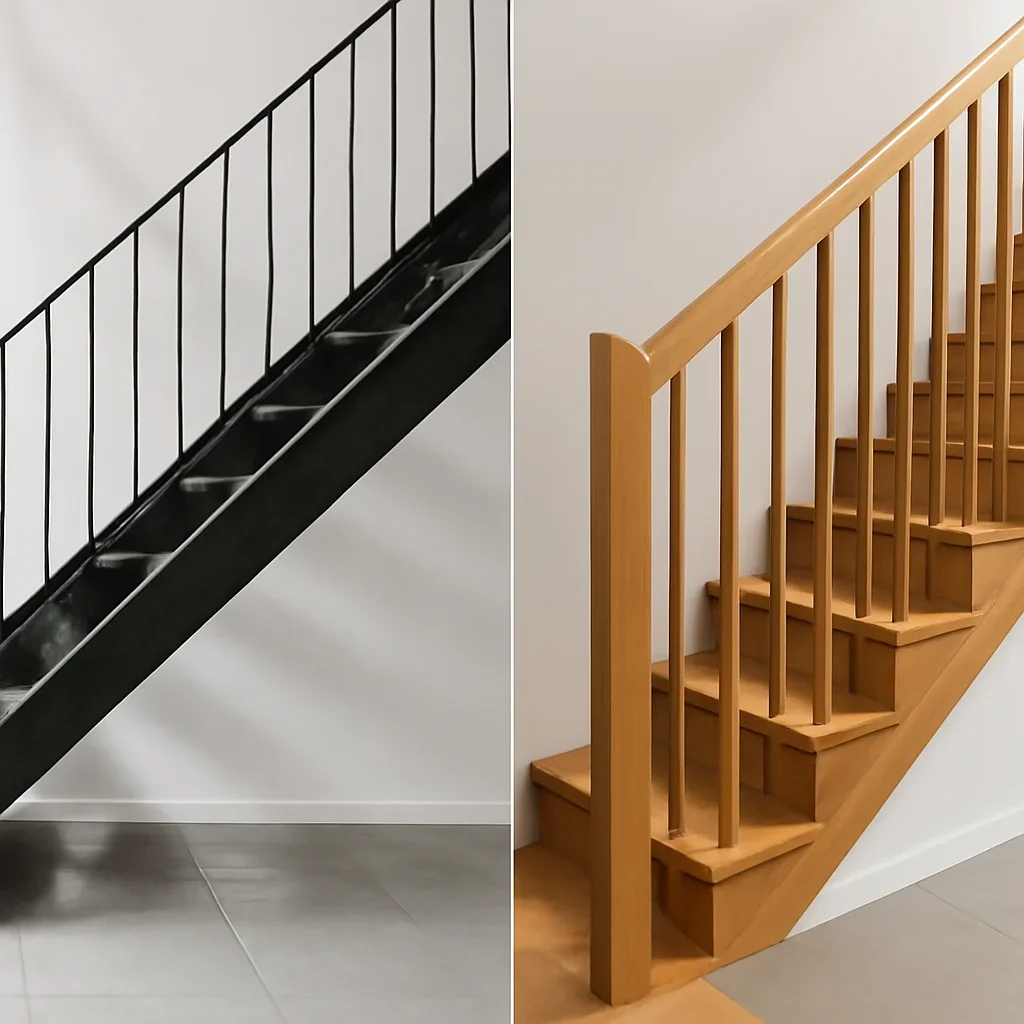
Local project reality: finish selection, moisture exposure, railing integration, floor transitions, site access, and installation sequence often matter as much as the base material.
Use this table to narrow the decision before moving into design, measurements, drawings, fabrication, or installation planning.
| Project factor | Metal stairs | Wood stairs | What to ask before deciding |
|---|---|---|---|
| Visual character | Sharper, cleaner, more architectural, and often better for open-riser or floating-style designs. | Warmer, softer, and often better for traditional, transitional, or fully wood-finished interiors. | Should the stair disappear into the space or become a feature? |
| Design flexibility | Strong for custom stringers, slim profiles, guard integration, glass, cable, and mixed-material details. | Strong for classic tread, riser, trim, and handrail expressions. | Do you need custom geometry, open sightlines, or a standard stair expression? |
| Exterior performance | Can be a strong fit when coating, drainage, slip resistance, and exposure details are planned correctly. | Can work in covered or carefully detailed areas, but exterior wear and finish upkeep need more attention. | Will the stair face rain, coastal air, freeze-thaw cycles, or heavy foot traffic? |
| Maintenance expectations | Depends on finish system, exposure, and coating quality. Powder-coated or properly treated metal can be efficient to maintain. | Depends on species, sealant, traffic, and moisture. Wood may need refinishing sooner in high-wear areas. | How much visible wear is acceptable over the next 5 to 10 years? |
| Budget clarity | Pricing depends heavily on steel profiles, engineering needs, finish, shop drawings, and installation complexity. | Pricing depends on wood species, detailing, labour, finish, and whether it is standard or custom-built. | Are you pricing a standard stair, a custom feature, or a full stair-and-railing package? |
| Best fit | Modern homes, exterior stairs, commercial features, custom builds, and projects needing a strong structural expression. | Traditional homes, warm interiors, renovation work, and projects where wood character is the main design goal. | Which material supports the architecture instead of fighting it? |
Metal stairs are often the better direction when the project needs strength, precision, open sightlines, and custom detailing that must coordinate with railings, walls, floors, and surrounding finishes.
For new builds and major renovations in the Lower Mainland, metal can help create floating stairs, slim stringers, and clean transitions with glass, wood, stone, or concrete.
For exterior stairs, metal can be a strong option when the design includes coating, drainage, tread safety, corrosion planning, and practical installation access.
For shops, offices, strata properties, and public-facing spaces, metal can support a durable, coordinated stair-and-railing package with a more engineered finish.
Wood is not the weaker choice. It is the better choice when the design goal is warmth, comfort, traditional detailing, or a stair that blends naturally with hardwood floors, cabinetry, trim, and interior millwork.
Wood can feel more natural in family homes, heritage renovations, and projects where the stair should support a softer interior style.
If the design calls for traditional treads, risers, posts, trim, and wood handrails, a full wood stair may be the cleaner route.
A hybrid stair is often the most practical compromise for BC design projects. The metal frame can deliver structure and clean lines, while wood treads add warmth underfoot and connect the stair to the rest of the interior.
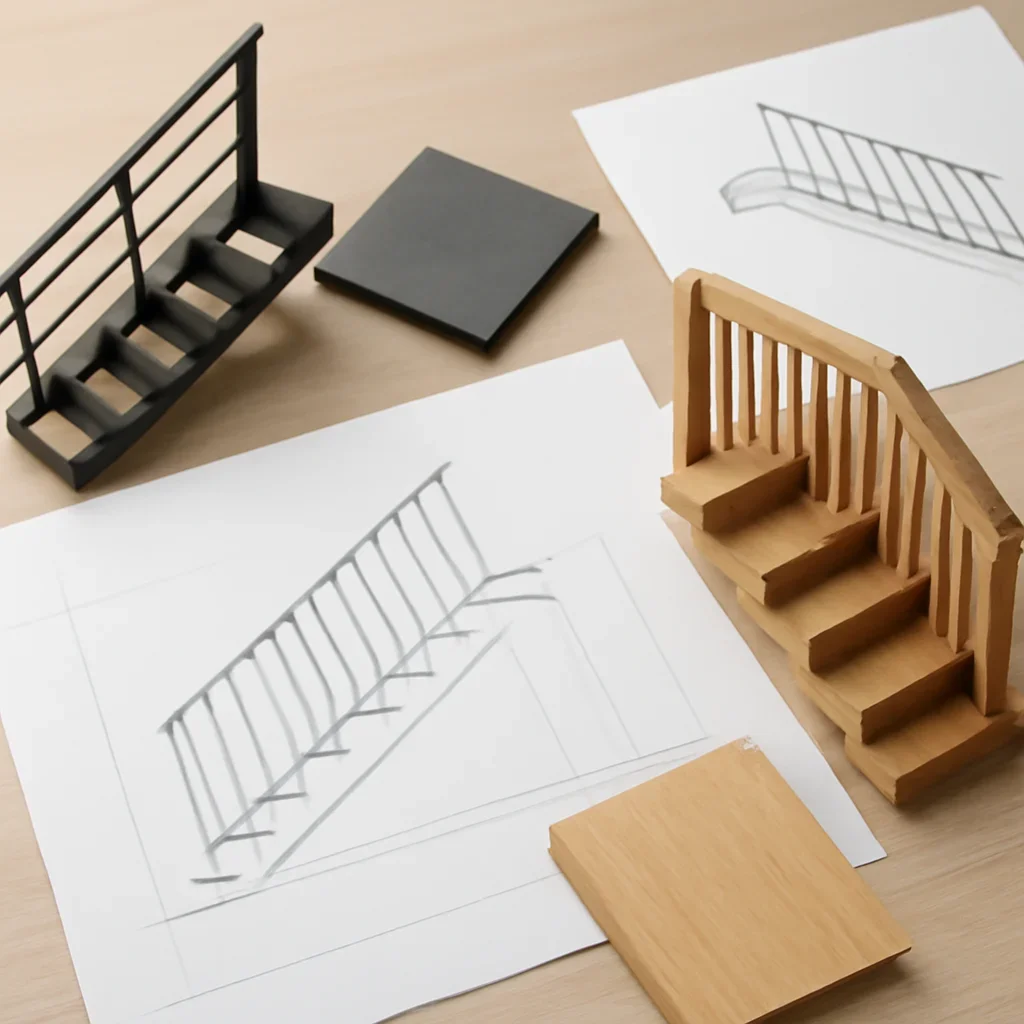
Local stair projects are shaped by more than the material. Tight urban lots, sloped properties, coastal moisture, renovation access, strata coordination, and builder timelines can all affect the best stair system.
Instead of quoting metal vs wood in isolation, the planning process should connect your design goal to the site conditions, drawings, finishes, safety requirements, installation sequence, and final use.
Share photos, drawings, measurements, or an early concept. We look at where the stair will sit, how visible it is, and what other trades or finishes it needs to coordinate with.
We compare metal, wood, and hybrid options against the desired look, structural expectations, railing integration, and finish requirements.
Finish planning should happen early, especially for exterior stairs, high-touch areas, black metal finishes, wood treads, and mixed-material connections.
The final direction should account for shop fabrication, site measurement, access, delivery, and the installation sequence with builders or other trades.
The more context you provide, the easier it is to compare metal and wood based on your actual project rather than generic material pros and cons.
These answers are written for homeowners, builders, designers, and commercial property teams comparing custom stair options in BC.
Not always. Metal stairs are often better for modern, exposed, exterior, or highly custom projects. Wood stairs are often better when warmth, traditional detailing, and interior comfort are the main goals.
Metal can be a strong exterior stair material when coating, drainage, tread safety, fasteners, and exposure details are planned correctly. Coastal and wet areas should be discussed early during material and finish planning.
Yes. A metal frame with wood treads is a common hybrid approach for custom homes and feature stairs. It can combine the clean structure of metal with the warmer feel of wood.
It depends on the design. A simple wood stair may be more cost-efficient than a custom metal feature stair, but complex wood detailing can also become expensive. Pricing should be compared after the scope, finish, railing, and installation details are clear.
Send photos, drawings, measurements, site location, interior or exterior use, preferred material direction, railing needs, and your timeline. That helps connect the comparison to the real scope.
Tell us where the stair will be used, what look you want, and what stage the project is in. We can help you compare the practical options before you commit to a material, finish, or fabrication path.