| Fit to the property |
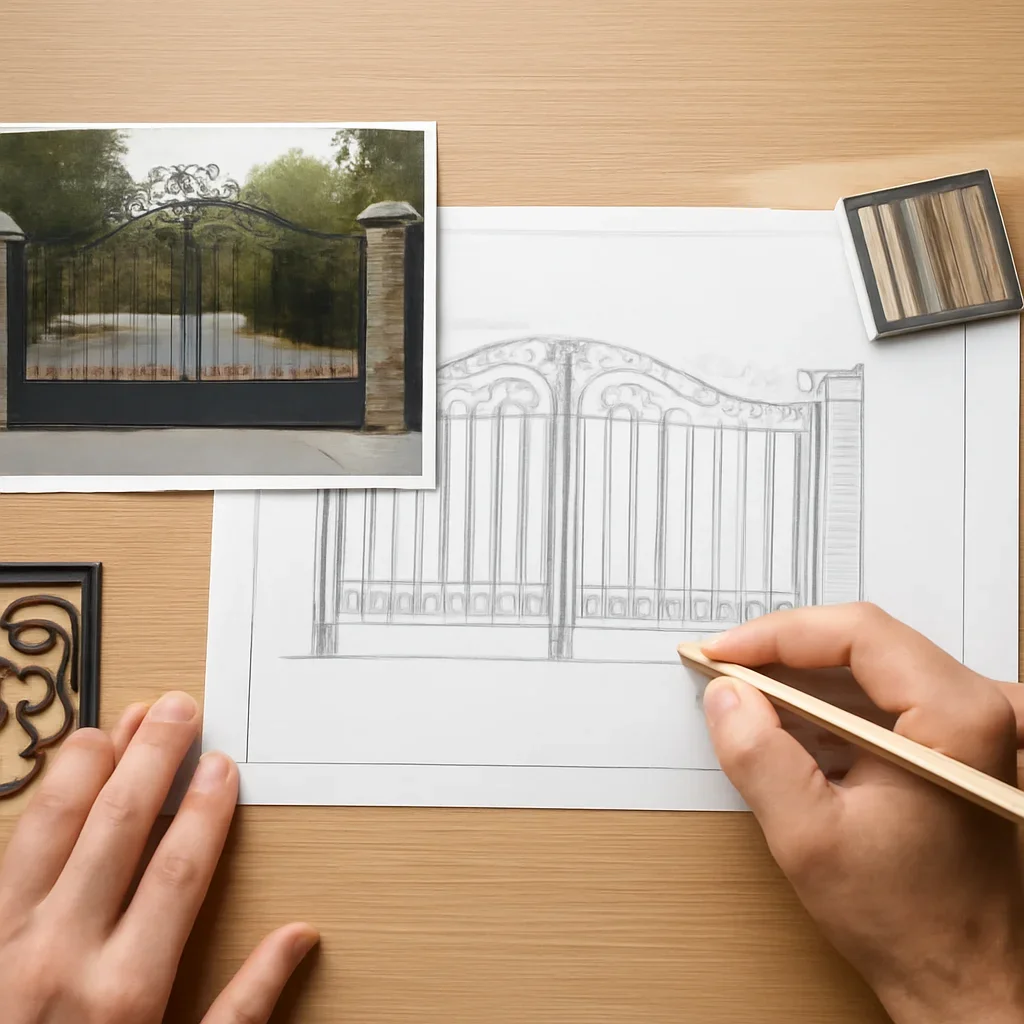
Designed around the actual opening, slope, post location, driveway approach, and privacy goals. |
Limited to available sizes, styles, and hardware systems. |
Many BC lots have grade changes, tight side yards, or existing walls and fencing that require site-specific planning. |
| Design control |
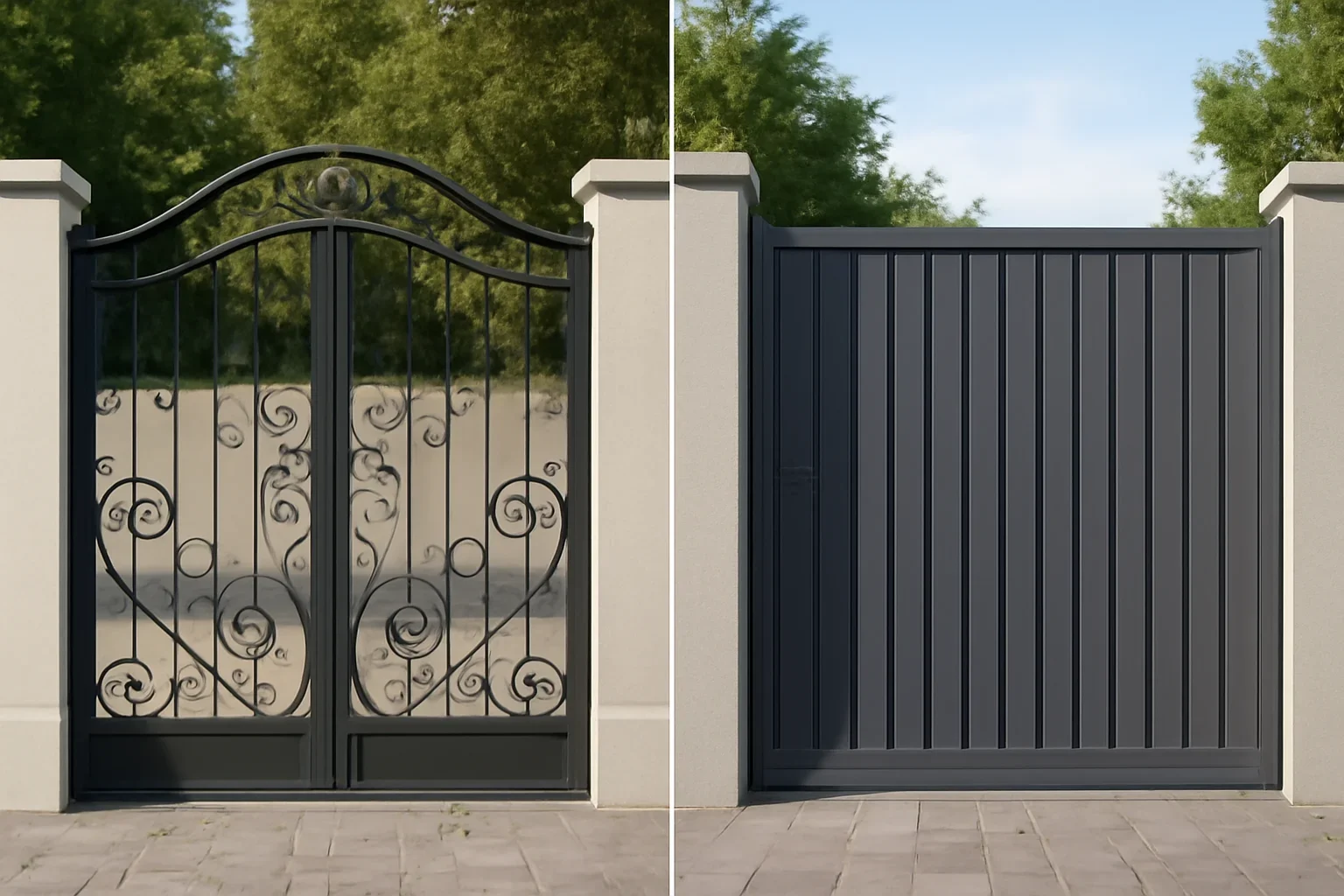
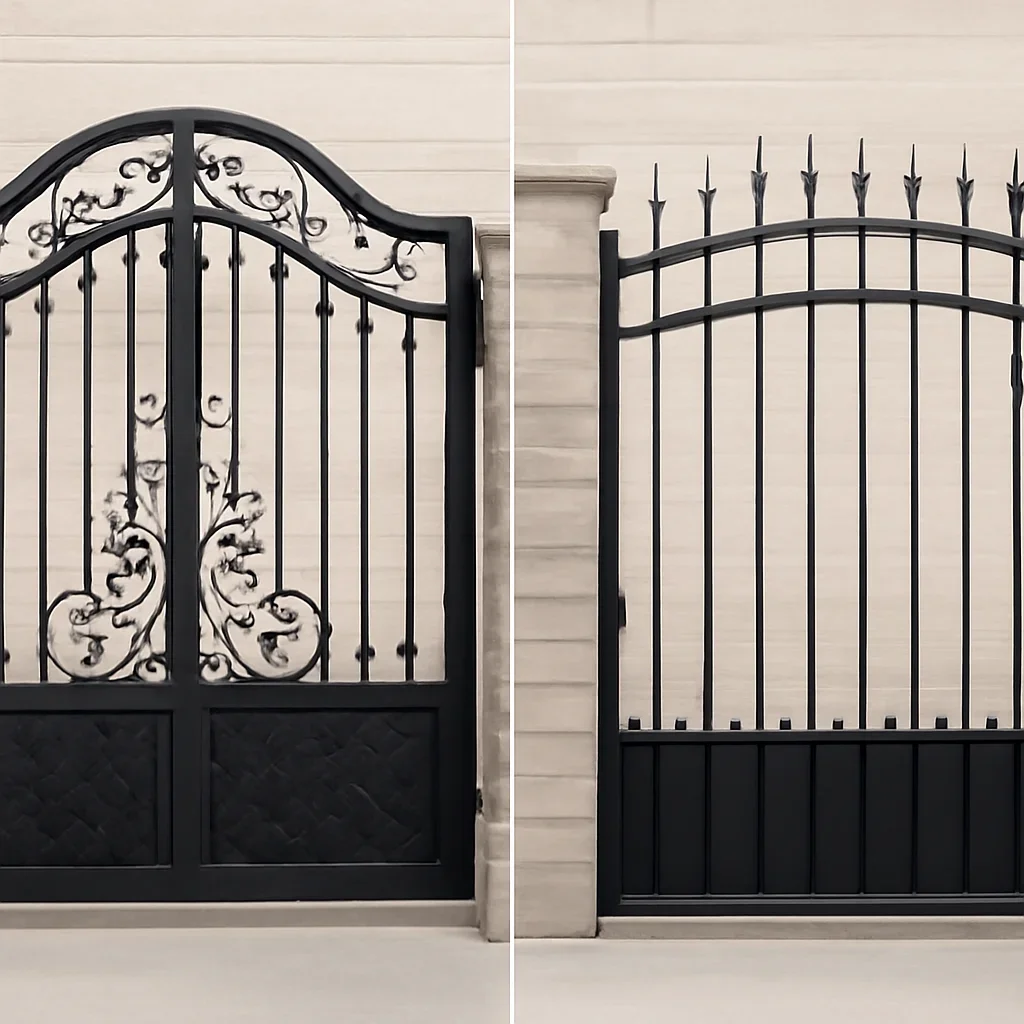
High control over pattern, material, height, scale, finish, spacing, and visual weight. |
More limited design flexibility. The property may need to adapt to the gate. |
Useful for modern homes, custom builds, and properties where the entrance is part of the curb appeal. |
| Privacy and security |
Can be detailed for partial privacy, full privacy, open visibility, controlled gaps, and durable frames. |
Often limited to the privacy and frame style available from the manufacturer. |
Privacy expectations vary between urban Vancouver lots, suburban Surrey homes, rural Langley properties, and strata entrances. |
| Finish planning |
Finish can be selected around exposure, desired appearance, maintenance expectations, and metal type. |
Finish options may be pre-set and less tailored to local conditions. |
Coastal areas need careful finish planning. Interior BC projects may have different sun, snow, and freeze-thaw considerations. |
| Automation readiness |
Can be coordinated early for operators, conduit, access controls, latch location, and clearance. |
May work with automation, but site and hardware limitations can create extra coordination. |
Gate automation is easier to plan before fabrication than after a gate has already been selected. |
| When it makes sense |
Best when the gate is visible, design-sensitive, technical, large, sloped, or tied into a broader build. |
Workable when the opening is straightforward and customization is not important. |
Custom is often the safer planning route when the project involves builders, architects, landscapers, or site constraints. |